





SINGLE
Standalone
Development and runtime on a single station
Development and runtime on a single computer for machine-side monitoring and small-scale applications.
- One license, one station
- Small line and machine applications
- Lowest hardware cost
IPCONIQ SCADA
A SCADA/HMI platform designed for the mid-to-high-end market. Grow large projects without redesigning them from scratch, thanks to object-based engineering, a distributed service architecture and built-in GIS.
What it does
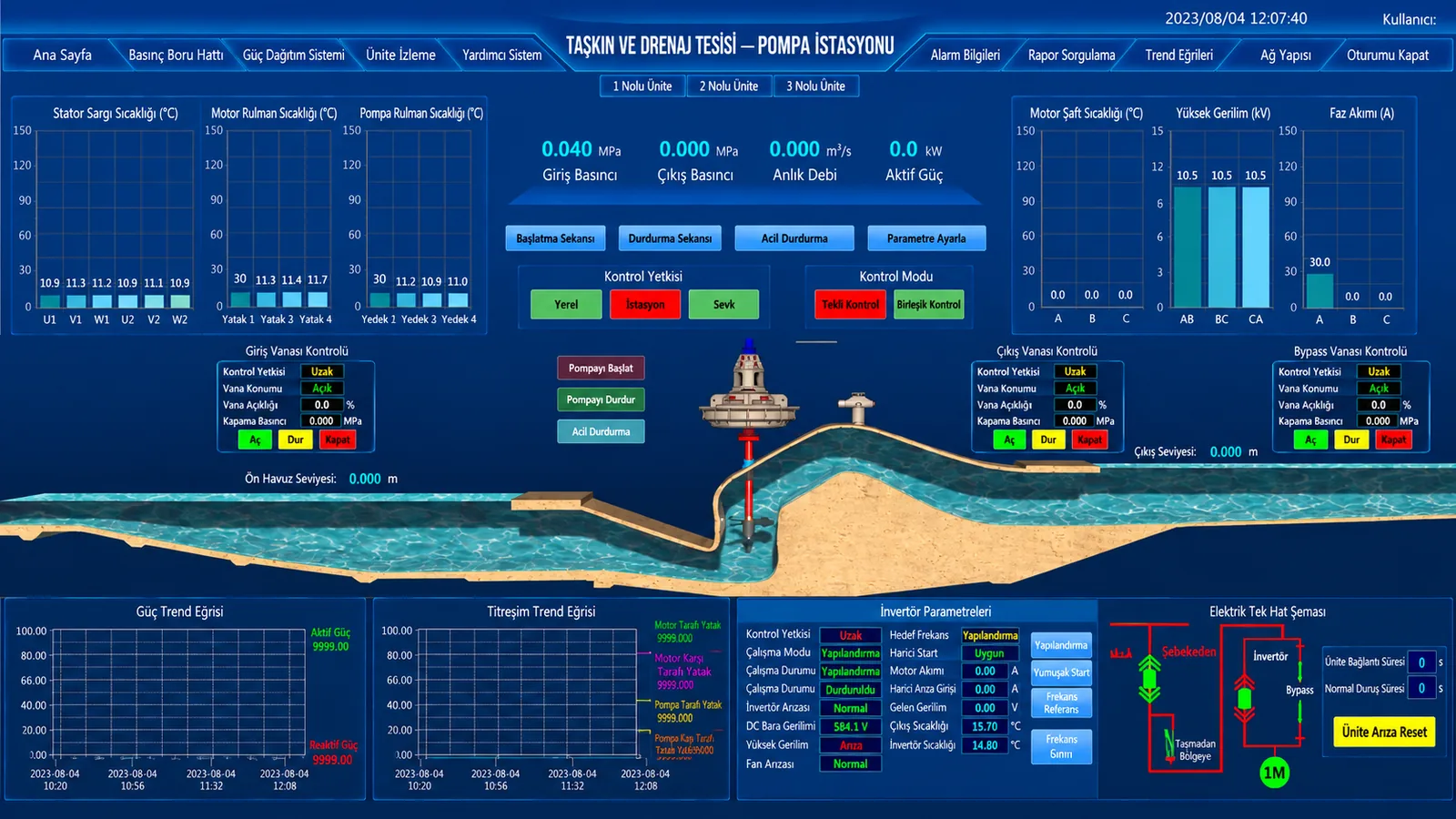
IPCONIQ SCADA is easy to learn and use, safe and stable in operation, and delivers software performance that meets the strict requirements of the high-end monitoring market.
With flexible Client/Server, Browser/Server and Mobile/Server architectures you can build distributed or centralized monitoring setups and publish the system over a local network, wide area network or mobile network.
Since its launch, IPCONIQ SCADA has been used in large-scale public and industrial projects such as water transmission, oilfield infrastructure, mining digitalization and central district heating systems. It is also widely used in digital manufacturing, especially in automotive and electronics/semiconductor production.
Runtime
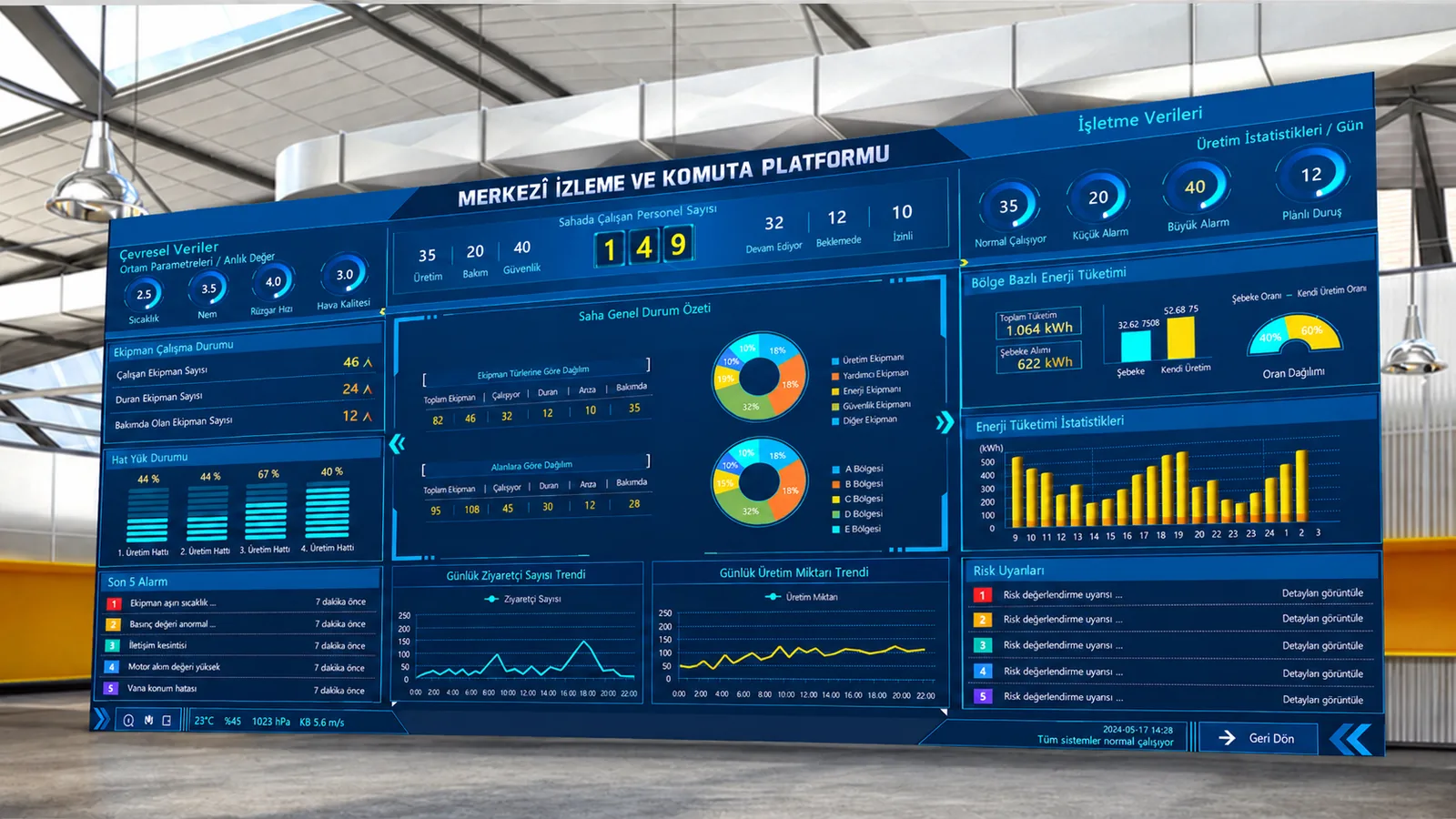
The screens are representative examples prepared to show what the platform can do; they are not images of any specific customer's live system.
Capabilities
Architecture
Field data is collected through IPCONIQ Connect, IPCONIQ SCADA handles monitoring and control in the operations layer, and historical data flows to IPCONIQ Historian.
Deployment models
Six deployment models can be built on the same project; the choice depends on the number of sites, the number of operator stations and redundancy requirements.
SINGLE
Standalone
Development and runtime on a single computer for machine-side monitoring and small-scale applications.
CLIENT–SERVER
Client / Server
Data services on a central server, multiple NetView clients in the field.
BROWSER–SERVER
Browser / Server
Publish monitoring screens to a standard browser with the WebServer module.
REDUNDANT
Redundancy
Prevent data loss with dual-server hot standby, dual-device and dual-network configurations.
CENTRAL MONITORING
GIS
Bringing dozens of sites across water, gas, heating and infrastructure networks into a single monitoring center.
DISTRIBUTED
Service-based
Real-time, historical, alarm and session services can be spread across independent servers.
Licensing
| Development Only (DO) | Developing and testing SCADA/HMI applications. |
|---|---|
| Runtime Only (RT) | Running the developed application in the field / in production. |
| Development Full (DF) | Combined use of development and runtime. |
| NetView (Client/Server client) | Distributed monitoring client in a client–server architecture. |
| WebServer | Browser-based remote monitoring. |
| Add-on modules | E-signature (FDA 21 CFR Part 11) and OPC UA are purchased separately. |
| Tag-based licensing | The license is based on the total tag count. Only I/O tags are counted; memory tags are free. |
|---|---|
| Tag options | 64, 128, 256, 500, 1,000, 1,500, 3,000 and 60,000 I/O tags. |
| Communication drivers | All drivers are free. |
| Web client | 5, 10, 20, 50 and 100 user packages (IE, Chrome, Microsoft Edge). |
| Mobile app | 5, 10, 20, 50 and 100 user packages for IPCONIQ Mobile (Android). |
| Demo mode | 2-hour resettable runtime and up to 32 I/O tags. |
| License duration | Purchased licenses are perpetual. |
| License form | USB hardware dongle or software license. |
Platform family
Share your tag count, architecture and field protocols, and we will prepare a license configuration and price quote.

IPCONIQ is a trademark of ICC Dijital. Product descriptions and technical data are based on the manufacturer's official documentation. Specifications are subject to change without notice; binding values are stated in the project-specific quotation.