







1. What Is SCADA? Components, Operating Principle and Architecture
Definition of SCADA: The Center of Industrial Control
SCADA is an acronym formed from the initial letters of the English term "Supervisory Control and Data Acquisition" and is most commonly translated into Turkish as "Gözetleyici Kontrol ve Veri Toplama" system. Essentially, SCADA is an integrated automation solution that allows for the monitoring, management, and analysis of industrial processes or infrastructure facilities from a central point over a wide area.
These systems include both software and hardware layers. Its primary purpose is to continuously collect real-time data from operational equipment in the field (motors, valves, sensors, etc.), process this raw data into meaningful information that operators can understand, and present this information through graphical interfaces.
Through this central system, operators can view processes that may be physically kilometers away from a single control room, monitor the overall health of the system, and intervene immediately in the process during abnormal situations or failures. The ultimate goal of SCADA is to maximize the efficiency, safety, and continuity of the system by utilizing the data obtained from the field.
Basic SCADA Components: Building Blocks of the System
A SCADA system consists of multiple components that work together in an integrated manner. The fundamental elements of this architecture are as follows:
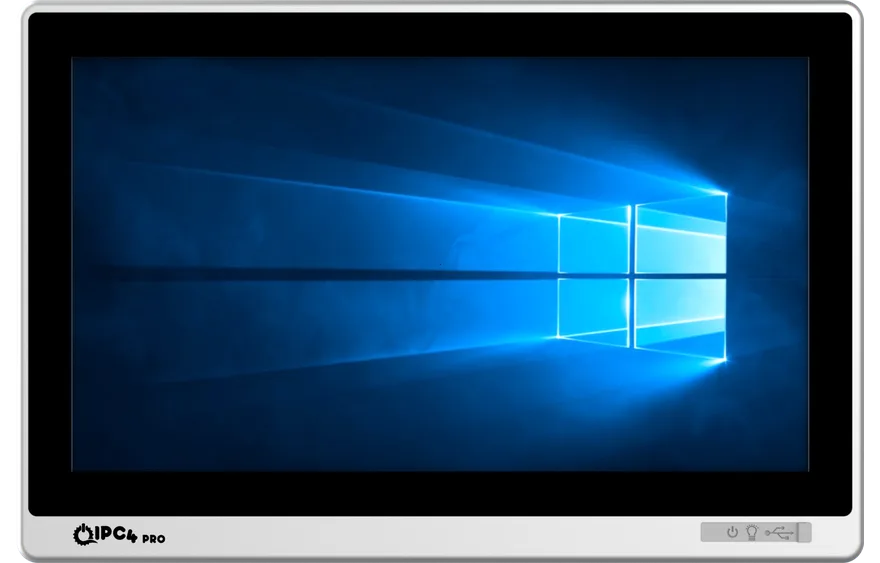
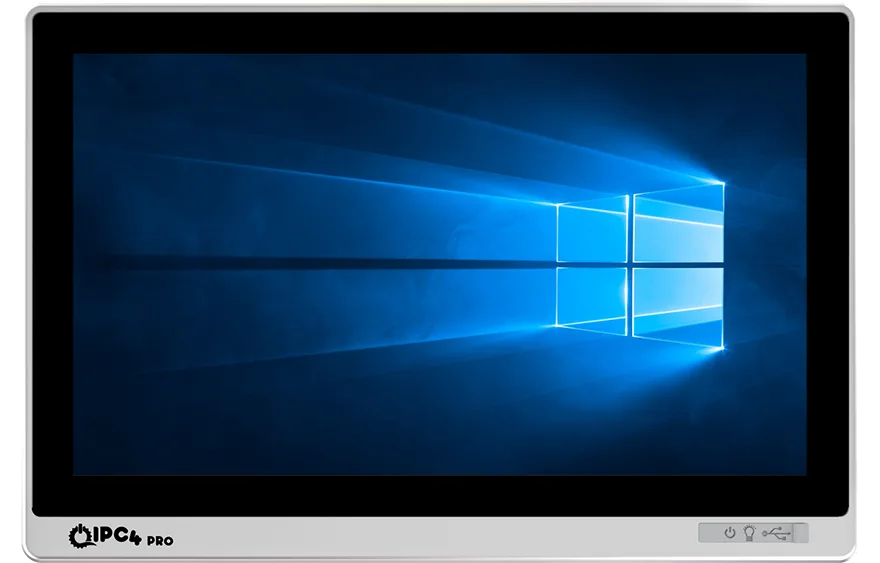
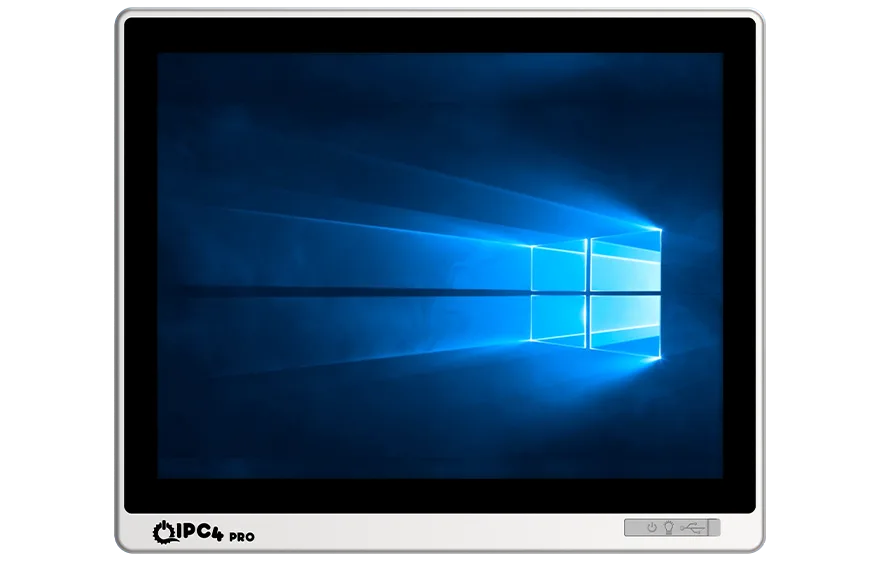
- HMI (Human-Machine Interface): This is the graphical platform through which the operator interacts with the system. It typically appears in the form of touch-screen monitors or computer stations. The operator monitors the status of all equipment in the field (pumps, heaters, level indicators) in real-time through the HMI, sees alarms, and enters commands for the process (e.g., "start the motor", "change the setpoint") through this interface. A successful HMI simplifies complex processes, thereby increasing the operator's decision-making speed. These critical interfaces are typically run on industrial panel PCs that are resistant to the harsh conditions of the field.
- MTU (Master Terminal Unit — central control unit / central server): This can be considered the brain of the SCADA system. It is the central computer or server cluster where the core of the SCADA software operates. Data from all PLCs and RTUs in the field is collected, processed, recorded in a historical database (Historian), and distributed to HMI stations at the MTU. Operator commands also primarily come to the MTU and are directed to the relevant field device from there. This central role requires 24/7 uninterrupted operation, so using high-reliability industrial PCs or server-class hardware instead of standard office computers is essential for the stability of the system.
- RTU (Remote Terminal Unit): These are microprocessor-based rugged devices typically located at geographically dispersed and remote points (pipelines, water tanks, transformer stations). RTUs read data from sensors (pressure, flow, etc.) at their location, convert this data into digital signals, and transmit it to the central MTU via telemetry (usually wireless or fiber optic). They also receive commands from the center to control field actuators (e.g., valves).
- PLC (Programmable Logic Controller): These are more flexible and powerful local control devices that have replaced RTUs, especially in factory and process automation. PLCs execute the real-time and rapid control logic of a machine or process unit. They make instantaneous decisions based on sensor data and manage motors, valves, etc., within milliseconds. In SCADA systems, PLCs autonomously perform local automation tasks and continuously provide data to SCADA, connecting to the control layer.
- Communication Network: This is the nervous system of the SCADA system. It enables the bidirectional data flow between the MTU (central server) and the field RTUs/PLCs. This infrastructure can consist of wired technologies (Industrial Ethernet, serial lines, fiber optics) or wireless technologies (Radio modem, GPRS/4G/5G, Wi-Fi, satellite). The reliability and speed of the network directly affect the performance of the SCADA system.
- Sensors and Actuators (Field Equipment): These are the contact points of the system with the physical world. Sensors are the "eyes" that measure process variables (temperature, level, pressure, flow, position) and convert this information into electrical signals. Actuators (motors, valves, pistons, heaters) receive control signals from SCADA or PLC and convert them into physical actions or movements.
Operating Principle and Architectural Evolution
The operating architecture of a SCADA system is fundamentally based on the hierarchy between the control layer in the field and the central control layer.
- Data Collection: Sensors in the field measure the process. These signals come to the PLC or RTUs.
- Local Control: PLC/RTUs perform programmed local control tasks based on this data (if any).
- Communication: PLC/RTUs periodically or event-based send the collected data and their status information to the central SCADA server (MTU) over the communication network.
- Processing and Visualization: The SCADA software running on the industrial PC at the MTU receives the incoming data, records it in the database (Historian), checks alarm limits, and visually presents the data on HMI screens for the operator.
- Intervention (Control): If the operator sees an anomaly on the HMI screen or wants to change a setpoint, they enter a command through the interface.
- Command Transmission: This command is sent from the MTU to the relevant PLC/RTU via the communication network.
- Execution: The PLC/RTU applies the incoming command to the relevant actuator in the field (e.g., valve), thereby intervening in the process.
As SCADA architectures have evolved, they have been divided into different generations:
- First Generation (Monolithic): In the 1980s, these were closed systems where the entire system operated on a single central mainframe computer, with no network connection, and RTUs connected with manufacturer-specific protocols.
- Second Generation (Distributed): Emerged in the 1990s with the widespread adoption of LAN (Local Area Network) technology. Control tasks were distributed across multiple stations, and data was shared over this local network.
- Third Generation (Networked): Developed with the adoption of Internet protocols (TCP/IP) and wide area networks (WAN). IP-based communication facilitated remote access to SCADA systems and integration of different systems but also brought cybersecurity vulnerabilities.
- Fourth Generation (Industry 4.0 and IoT): Today's modern SCADA systems are integrated with Industry 4.0 and Internet of Things (IoT) concepts. Cloud computing integration, mobile access, advanced analytics, and AI-supported decision mechanisms are features of this generation.
A modern SCADA architecture is layered: field devices (sensors and actuators) at the bottom, the control layer (PLC/RTU) above them, then the SCADA server/client layer running on industrial PCs, and at the top a layer that integrates with enterprise systems (MES/ERP). This structure lets the system scale flexibly from a small plant to nationwide infrastructure.
2. SCADA Brands Common in the Turkish Market
The Turkish industrial automation market is competitive, with SCADA software that has proven itself on a global scale being widely used. In many sectors, especially in energy, water management, manufacturing, and process industries, solutions from automation giants such as Siemens and Schneider Electric hold significant market share. Additionally, other global players like Rockwell Automation, ABB, AVEVA (Wonderware), and Mitsubishi are also widely preferred in sectors where they are strong. In recent years, Turkish-origin SCADA software offering cost advantages and local engineering support has also found its place in the market.
The table below summarizes the most frequently encountered SCADA brands in the Turkish market, their strengths, and typical areas of use:
| SCADA Brand | Manufacturer (Origin) | Strengths and Features | Common Areas of Use | Presence in Turkey |
|---|---|---|---|---|
| Siemens Simatic WinCC | Siemens AG (Germany) | Fully integrated with Siemens' TIA (Totally Integrated Automation) portal. Offers strong scalability (from small panels to distributed systems), multilingual support, advanced mobile access, and cybersecurity features. | Manufacturing industry (automotive, food, pharmaceuticals), energy production and distribution, infrastructure automation (building, tunnel). It is a natural choice in facilities where Siemens PLCs are heavily used. | Supported by direct sales from Siemens Türkiye (Siemens San. ve Tic. A.Ş.) and a strong solution partner network. |
| AVEVA™ InTouch & System Platform | AVEVA Group plc (UK) (Schneider Electric subsidiary) | One of the most established and widely used HMI/SCADA software in the market. Known for user-friendly graphical interfaces, excellent object-oriented development (System Platform), and broad device compatibility. It has strong historical data (Historian) and reporting tools. | Process industry (petrochemical, chemical), food and beverage, water and wastewater management, natural gas distribution networks. Used in hundreds of thousands of facilities worldwide. | Bautek Information Technologies operates as the official distributor of AVEVA in the Turkish and Azerbaijani markets. |
| Schneider EcoStruxure SCADA | Schneider Electric (France) | Offers high-performance solutions especially for telemetry and widely distributed infrastructures (Geo SCADA). Citect is a strong SCADA platform focused on facilities. Integrated with energy efficiency and asset management under the EcoStruxure umbrella. | Energy sector (transmission, distribution, renewable plants), water & wastewater networks, oil & gas pipelines, smart city applications. | Supported by Schneider Electric Turkey office and a wide network of authorized solution partners for support and sales services. |
| Rockwell FactoryTalk View | Rockwell Automation (USA) | Offers unique integration with Allen-Bradley (A-B) PLC and control systems. It is the cornerstone of "The Connected Enterprise" vision. Reliable, robust, and optimized especially for discrete manufacturing processes. | Automotive, white goods, tire, fast-moving consumer goods (CPG) production lines, pharmaceuticals, and packaging. Frequently preferred in factories where A-B controllers dominate. | Supported by Rockwell Automation's authorized distributor in Turkey, AB Market Automation, and other solution partners. |
| ABB MicroSCADA | ABB Ltd. / Hitachi Energy (Switzerland/Japan) | A highly robust and reliable SCADA solution specifically designed for electric power systems and transformer station automation. Fully supports energy protocols such as IEC 61850. Offers high redundancy and fast protection functions. | Electricity transmission and distribution networks (TEİAŞ and TEDAŞ projects), substations, renewable energy plants (wind and solar), rail electrification. Specialised in critical energy infrastructure. | After the transfer of ABB's energy division to Hitachi Energy, this product group is now offered by Hitachi Energy Turkey. |
| Movicon 11 / Movicon.NExT | Progea / Emerson Automation Solutions (Italy / USA) | The Movicon family developed by Progea (Emerson) offers scalable SCADA/HMI solutions with its object-oriented structure and extensive protocol support (OPC UA, Modbus, Siemens S7, MQTT, etc.). While Movicon 11 operates stably in a classic Windows environment, Movicon.NExT provides cloud integration and web access with modern .NET and HTML5 infrastructure. Both versions work with high performance on industrial panel PCs, serving as both HMI stations and central SCADA servers. | Energy production and distribution, water and wastewater infrastructures, food and beverage facilities, chemical and pharmaceutical industries, building automation, transportation and infrastructure control systems, and machine manufacturers (OEM) widely prefer it. | In Türkiye, alongside Emerson, ICC Dijital Endüstriyel Teknolojiler Ltd. Şti. has also sold Movicon products independently since 2016. |
Note: This list covers the most dominant players in the market. Beyond them, many other capable SCADA products are used successfully in Türkiye across sectors and niche applications: GE Digital iFIX/Cimplicity (now part of Emerson), Inductive Automation Ignition (a modern SCADA notable for IIoT and platform independence), COPA-DATA Zenon (strong in energy and pharmaceuticals), Mitsubishi MAPS SCADA and Phoenix Contact Visu+. Besides WinTr, other domestic products such as Mikrodev ViewPLUS SCADA are also chosen, particularly in infrastructure projects such as water authorities.
3. SCADA and PLC: Integration Techniques and Common Combinations
Different Roles of SCADA and PLC
SCADA and PLC are two fundamental components that occupy different levels of the industrial automation pyramid but complement each other perfectly.
- PLC (Executor): The PLC is the "brain" of the machine or process in the field. It performs real-time control. It reads data from sensors within milliseconds, processes it according to programmed logic (ladder, FBD, etc.), and sends commands to actuators (motor, valve). The PLC's task is to execute the process quickly, safely, and autonomously.
- SCADA (Manager/Supervisor): SCADA is the "supervisory" layer. It typically does not perform direct real-time control (leaving this task to PLCs). The role of SCADA is to collect data from one or multiple PLCs and other smart devices, visualize this data at a central point, record it (historical data), manage alarms, and provide the operator with an overall control capability.
In summary, while the PLC controls an individual station or machine, SCADA supervises the entire facility or factory. SCADA acts as a main control center for dozens of PLCs in the field; it monitors the subprocesses executed by the PLCs and sends commands to them to change operational parameters (such as setpoints) when necessary. This hierarchical division of labor forms the foundation of modern automation.
Technical Integration Methods: Making the System Communicate
For a SCADA system to communicate with PLCs of different brands and models, standardized industrial communication protocols are needed. SCADA software can communicate with different devices thanks to a wide variety of driver libraries.
The most common integration methods include Modbus (both serial RTU and Ethernet over TCP/IP) and OPC (OLE for Process Control). OPC serves as a "universal translator" that standardizes data exchange between devices and software from different manufacturers. While the SCADA software acts as the "OPC Client," the PLCs or an intermediary server take on the role of "OPC Server."
Today, the more secure, platform-independent, and modern version of OPC, known as OPC UA (Unified Architecture), is rapidly becoming the standard in PLC-SCADA integration. It is sufficient for the SCADA software to support the protocol of the PLC it will connect to (e.g., S7 for Siemens, EtherNet/IP for Rockwell) or OPC UA for integration.
Situations Where PLC + SCADA Combination is Preferred
In the overwhelming majority of industrial automation applications, PLC and SCADA are used together. This combination enables both local process reliability (thanks to the PLC) and centralized management and optimization (thanks to SCADA).
Without a PLC, SCADA would have no intelligent data source to observe and supervise; without SCADA, PLCs would remain isolated automation islands that cannot be monitored from the control room, lacking coordination and data logging.
For example, a cement plant has dozens of different PLCs controlling the kiln, mills, and packaging. The SCADA system in the central control room collects data from all these PLCs and presents the overall status of the entire factory to the operator on a single screen. The operator can change the kiln temperature setpoint or obtain production reports through SCADA.
This duo is indispensable, especially in geographically distributed systems such as water networks, electrical distribution lines, or pipelines. While PLC/RTUs at remote stations provide local control, SCADA connects all these points to the center, providing holistic management. While a simple control of a single machine may be sufficient with PLC + HMI Panel, as soon as there are multiple control points, data logging needs, or remote monitoring requirements in the system, the PLC + SCADA architecture becomes mandatory.
4. SCADA – DCS Relationship: Differences and Application Preferences
SCADA and DCS (Distributed Control System) are two systems that are often confused in the world of industrial control but fundamentally have different philosophies and areas of application.
Basic Differences: Data-Focused vs. Process-Focused
- Scope and Geographical Distribution:
- SCADA: Generally "data-focused" and designed for the remote monitoring of assets spread over large geographical areas (for example, a country's pipeline, a city's water network).
- DCS: Generally "process-focused" and designed for tight control of complex, continuous, and integrated processes within a single facility or campus (for example, an oil refinery, a chemical plant, a thermal power plant).
- Control Architecture and Hardware:
- SCADA: Has a more "open" architecture. PLC/RTUs, sensors, and devices from different manufacturers can connect to a SCADA software. Hardware and software are generally separate.
- DCS: Is a more "integrated" and generally "proprietary" system. Controllers, I/O modules, engineering stations, and operator interfaces are parts of a single package designed, optimized, and integrated by a single manufacturer.
- Real-Time Control and Response Time:
- SCADA: Focuses on "supervisory" control. Real-time fast control (at the millisecond level) is left to the PLCs in the field. The data collection cycle of SCADA is generally in the order of seconds.
- DCS: Is designed for "regulatory" control. The system's own controllers execute complex process loops (PID loop, etc.) very quickly and deterministically (at the millisecond level). The control logic is managed centrally but executed by distributed controllers in the field.
- Redundancy and Reliability:
- DCS: Designed for high reliability and continuous operation (24/7/365). Redundancy (CPU, power supply, network) is generally a standard part of the system. A single failure is not desired to stop the entire process.
- SCADA: Redundancy (e.g., redundant server) is generally optional and added according to the project. Layered hardware redundancy is not expected as a standard like in DCS.
- Cost and Scale:
- DCS: Due to high integration, proprietary hardware, and embedded redundancy, the initial cost is generally much higher.
- SCADA: Offers a more flexible and scalable cost structure. It is more suitable to start small and grow. It is much more cost-effective than DCS for widely distributed points with low I/O.
Where to Prefer Which System?
Selecting the right system is critical for the success of the project:
- Situations Where DCS is Preferred: Singular facilities where the process is continuous, complex, and highly integrated. Places where high-speed, deterministic control and process safety are required at the highest level.
- Examples: Oil refineries, chemical and petrochemical facilities, thermal power plants, pharmaceutical production facilities.
- Situations Where SCADA is Preferred: Systems where control points are geographically distributed, and remote monitoring and telemetry are at the forefront. Or centralized monitoring of discrete production lines controlled by different PLCs within a factory.
- Examples: Water and wastewater networks, oil/gas pipelines, electric transmission/distribution networks, wind/solar power plant farms, transportation (tunnel, highway, railway) systems, factory production monitoring.
Today, a convergence between these two technologies is also observed. Modern DCSs offer SCADA-like flexible interfaces, while powerful SCADA systems can also run more complex control algorithms. In some hybrid solutions, the main process of a facility is controlled by DCS while auxiliary units such as energy or water can be monitored by SCADA.
5. The Role of Industrial PCs in SCADA Applications
The heart of modern SCADA systems is not only the software running on them but also the hardware platforms that host this software. Since SCADA software needs to operate continuously, reliably, and with high performance 24/7, specially designed Industrial PCs (IPC) are used instead of standard office-type computers for this task.
Industrial PCs play a vital role in the SCADA architecture as both the central server and the operator interface terminal (HMI). The success of SCADA largely depends on the correctly chosen industrial PC platform.
Industrial PC as SCADA Server and Station
The central software of a SCADA system (MTU) is the core application that collects, processes, records data from the entire field (PLC/RTU), and distributes it to HMI clients. A momentary halt in this critical task means blindness for the entire facility.
Therefore, high-reliability industrial-class PCs or servers must be preferred as SCADA servers. Using a commercial desktop computer poses a serious risk that could lead to unexpected system crashes, data loss, and production downtimes.
Similarly, Industrial Panel PCs are ideal solutions for HMI stations used by operators in the field or control room. These devices combine the touch screen and computer case into a single durable chassis. They can be directly mounted on the production floor, on machines, or on control panels. They ensure that the operator can reliably access the system even under harsh industrial conditions.
Critical Hardware Features of Industrial PCs
The reason for the preference of industrial PCs in SCADA applications lies in the following fundamental differences from commercial PCs:
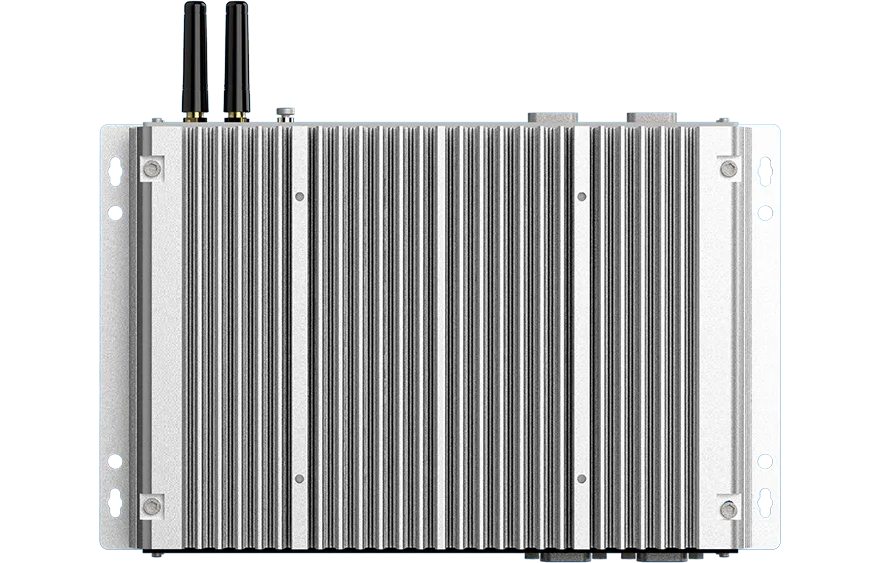
- Ruggedized and Fanless Design: Industrial PC cases are typically designed to be fanless (passive cooling). This prevents the failure of a moving part like a fan or clogging the system by drawing in dust in dusty factory environments.
- Durability Against Harsh Conditions: These devices are produced to withstand industrial conditions such as high temperatures (e.g., -20°C to +60°C), low temperatures, humidity, dust, and continuous vibration. They are protected against electromagnetic interference (EMC/EMI).
- High Reliability and Long Lifespan (MTBF): They are designed to operate 24/7, and their mean time between failures (MTBF) is significantly higher than that of commercial PCs.
- Industrial I/O and Power Supply: They typically operate with industrial power sources such as standard 24V DC and are protected against voltage fluctuations. They offer rich connectivity options such as multiple Ethernet ports and older serial ports like RS-232/485 for direct communication with PLCs.
- Industrial Panel PC (HMI) Features: Models used as operator interfaces typically have front panels with IP65 protection class (dust and water resistant) and resistive or multi-touch capacitive screens that can be used with gloves.
Placement and Tasks in the Field
In a SCADA architecture, different types of industrial PCs are used for different tasks:
- SCADA Server: These are industrial PCs that are typically rack-mounted or box-type, installed in the system cabinet in the control room. They can have high processing power (Core i5/i7/i9) and redundant storage (RAID). All database and alarm services operate here.
- Operator Station (Client/HMI): Used as desktop PCs in the control room or as industrial panel PCs at the machine in the field. They visualize data by connecting to the server.
- Edge Computer (Edge PC): In some modern architectures, small, compact industrial PCs (Edge devices) can be used to preprocess data (filtering, analysis) in the field before sending it to the center.
In short, the first step in building a stable, dependable SCADA system is choosing the right hardware platform to run the software on. That platform should be a high-performance, long-life industrial PC able to stand up to the demands of the industrial environment.
6. Programming Industrial PCs in SCADA Systems
In SCADA systems, the term "programming" carries a different meaning than programming a PLC (e.g., writing Ladder Logic). SCADA programming largely relies on configuration, visual design, and integration. These processes are carried out through specialized SCADA development software running on industrial PCs.
SCADA Development Software (IDEs)
Each SCADA brand (Siemens, AVEVA, Rockwell, etc.) offers its integrated engineering platform (IDE) for project development (e.g., TIA Portal, FactoryTalk Studio, Ignition Designer). These software packages contain all the tools needed for the developer to configure the system:
- Graphic screen (mimic) design editors
- Data tag database management
- Alarm and event configuration
- Trend and historical data (Historian) settings
- Communication driver configuration
Developers typically design interfaces using drag-and-drop methods in these environments, add ready-made objects (motor, pump) from the library, and link these objects to the PLC tags in the field.
Programming Languages and Scripting
SCADA software supports embedded scripting languages for situations where standard configuration tools are insufficient or to create custom business logic. Scripts are used to perform complex calculations when a button is pressed, generate custom reports, or execute specific queries on the database.
Commonly used languages include VBScript (Visual Basic Script) and C#. For example, while Siemens WinCC supports both C-Script and VBScript, modern platforms like Ignition are entirely built on Python (Jython implementation). The local software WinTr offers flexibility in coding in C# or VB.NET. A SCADA developer is expected to customize or combine existing functions using these scripting languages rather than writing code like a traditional programmer.
Interface (HMI) Design
The most visible part of SCADA programming is the design of the operator interface. The goal is to transform complex processes into intuitive and simple screens that the operator can understand at a glance (situational awareness).
- A schematic drawing of the process is created.
- Equipment (valves, tanks) is added and associated with live data (e.g., the tank level filling with live data).
- Alarm summary pages, trend graphs, and reporting windows are created.
- Modern SCADA platforms allow for the design of HTML5-based web interfaces and mobile device-compatible dashboards, in addition to traditional interfaces running on industrial PCs.
Data Connections and Integration
The fundamental function of SCADA is to collect data. Therefore, when developing a SCADA project, the software on the industrial PC is configured to communicate with the devices in the field:
- Field Integration (Vertical): The protocol through which communication will occur with PLC/RTUs (Modbus TCP, OPC UA, S7, etc.) is selected, and device addresses are linked to SCADA tags. OPC UA is increasingly preferred to bring together devices of different brands under a single standard and secure framework.
- Database Integration (Historian): The SCADA system connects to a database, usually a SQL database like Microsoft SQL Server or Oracle, to record the collected historical data (temperature, pressure history, etc.). The developer configures which data will be recorded and how frequently.
- Enterprise Integration (Horizontal): SCADA systems no longer operate in isolation. They need to integrate with upper-layer MES (Manufacturing Execution System) or ERP (Enterprise Resource Planning) systems to calculate production efficiency (OEE) or receive work orders. This integration is typically done via SQL queries, OPC UA, or REST/SOAP web services.
Cybersecurity Measures: Protecting Critical Infrastructure
SCADA systems running on industrial PCs have become targets of cyberattacks as they open up to the IT world. Therefore, SCADA programming and installation must include strict security measures:
- Network Segmentation: The SCADA network (OT - Operational Technology) must be physically or logically (VLAN, Firewall) separated from the corporate office network (IT).
- Software Updates and Patches: Security patches for the operating system (Windows, Linux) and SCADA software on the industrial PC must be applied regularly. Approved antivirus software should be used.
- Access Controls: Strong passwords, role-based authorization (operators only observe, engineers change settings), and two-factor authentication (2FA) should be used for access to the SCADA system whenever possible.
- Secure Protocols: Encrypted and authenticated protocols such as OPC UA or TLS-supported MQTT should be preferred over unencrypted protocols like Modbus for data communication. Remote accesses must be done via VPN.
- Intrusion Detection (IDS/IPS): Security devices that monitor SCADA network traffic and report abnormal activities should be positioned.
- Backup and Disaster Recovery: Backups of the SCADA project and historical database should be taken regularly. In critical systems, a redundant industrial PC (Hot-Standby server) architecture should be established to take over immediately in case of a server failure.
- Human Factor: Cybersecurity awareness training for operators and engineers is as important as technical measures.
Result: Configuring SCADA systems on industrial PCs is a versatile engineering process that combines software configuration, graphic design, database management, network communication, and cybersecurity disciplines. A successful SCADA system emerges from the synergy of well-structured software running on correctly selected industrial hardware, a secure network architecture, and a competent engineering team. These systems form the cornerstone in meeting the efficiency, safety, and control needs of modern industry.