

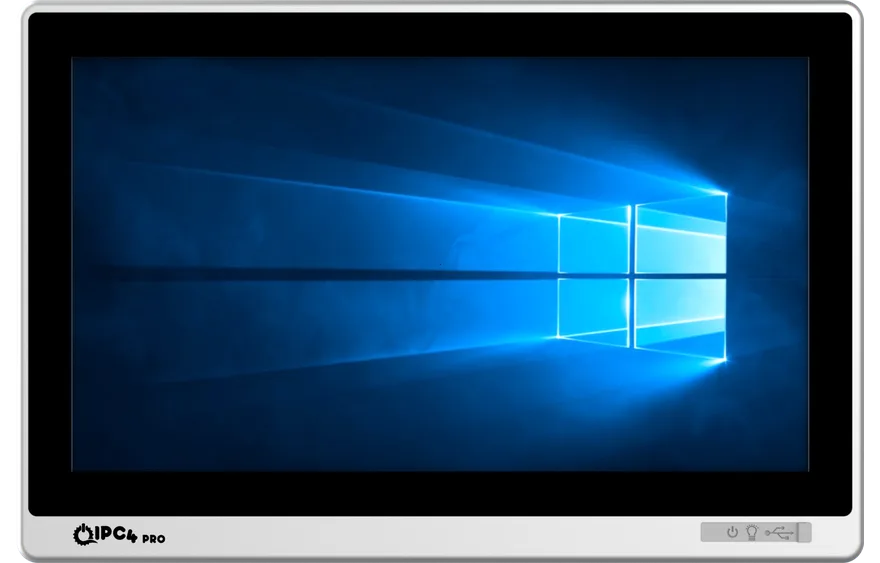
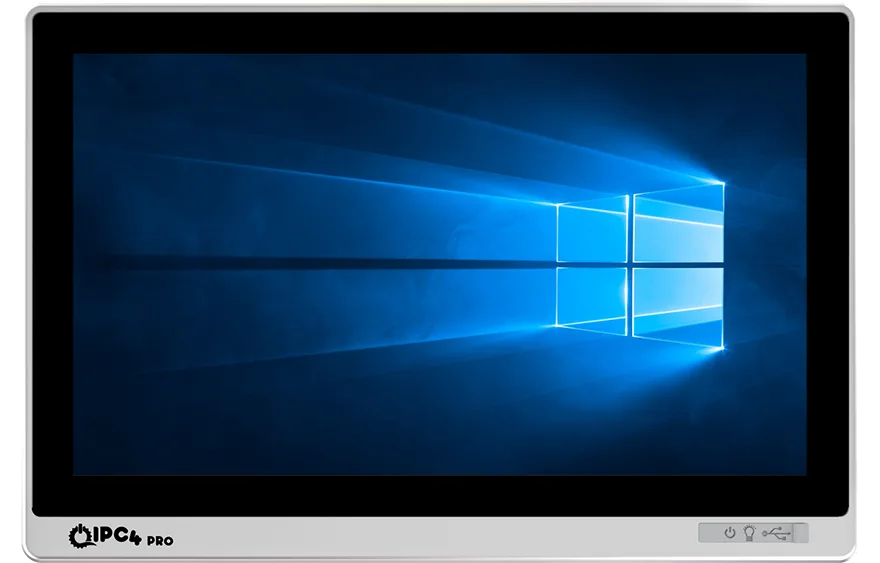
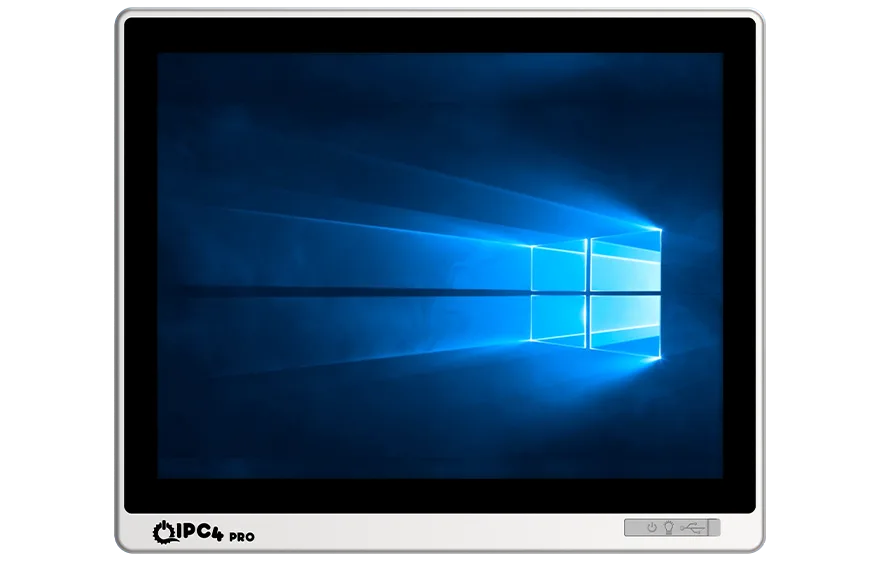




Today's production facilities are no longer content with basic control functions alone. Modern industrial automation brings complex requirements: high data processing capacity, cloud connectivity, visual analysis and system integration. These demands pushed classic HMI operator panels to their limits and moved the sector towards a more capable platform — the industrial Panel PC.
1. Why Industrial Panel PCs Instead of HMIs?
Classic HMIs are typically ARM-based control interfaces with limited processing power. Basic commands are sent via the screen, and data logging or remote monitoring often depends on external systems. In contrast, industrial panel PCs are fully-fledged computers. They run on the Windows IoT Enterprise operating system, can multitask simultaneously, and are resilient to the harsh conditions of factory environments.
The reason for this shift is that production lines now need more than operator input: advanced data analysis, graphical monitoring, remote maintenance and AI-assisted control. A Panel PC is therefore not merely a user interface — it is the centre of the plant's digital intelligence.

2. Dual Purpose: HMI plus Engineering Platform
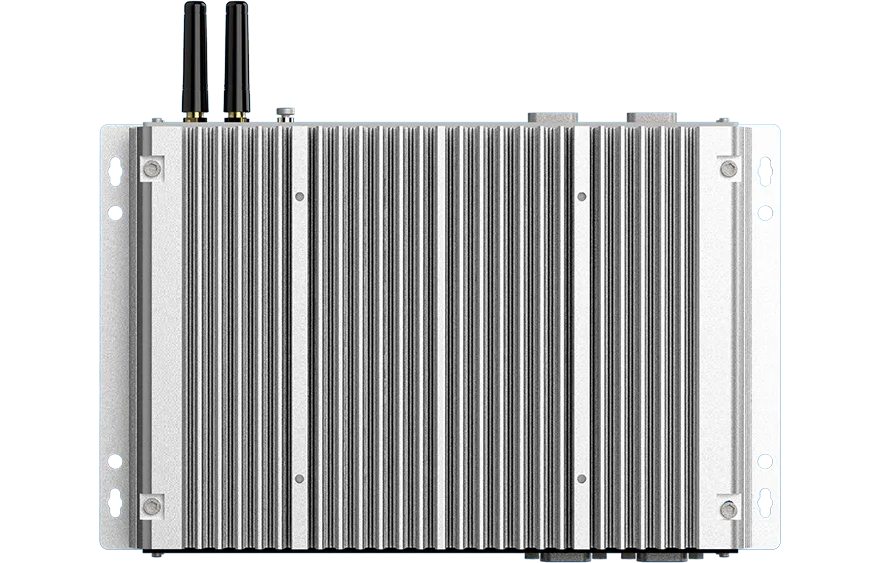
Industrial Panel PCs are compact systems with touch screens, fanless designs, and IP65 protection class. This structure allows the device to function as both an operator panel (HMI) and an engineering station. The engineer develops the PLC program on the same device; the operator manages the process from the same interface.
This model enables the system to be consolidated on a single hardware in the field. For example, software such as Omron Sysmac Studio, Codesys, TIA Portal, CX-Supervisor, or FactoryTalk View can run directly on the panel PC. Thus, engineering, operations, and maintenance processes are integrated on the same platform.
3. Hardware Superiority: Real Computer Power
The biggest difference between panel PCs and HMIs is the processor architecture they use. x86-based CPUs like Intel Celeron, Atom, or Core i5/i7 offer high processing capacity and long-term stability. This allows PLC programming, HMI screen design, EtherCAT configuration, data logging, alarm management, and OPC UA-based communication to be carried out on a single device.
Devices running Windows 10/11 IoT Enterprise are fully compatible with industrial software. Users keep their licensed software base while managing system security and updates in line with corporate IT policy.
4. IPC4PRO and AAEON: A New Standard for Field Reliability
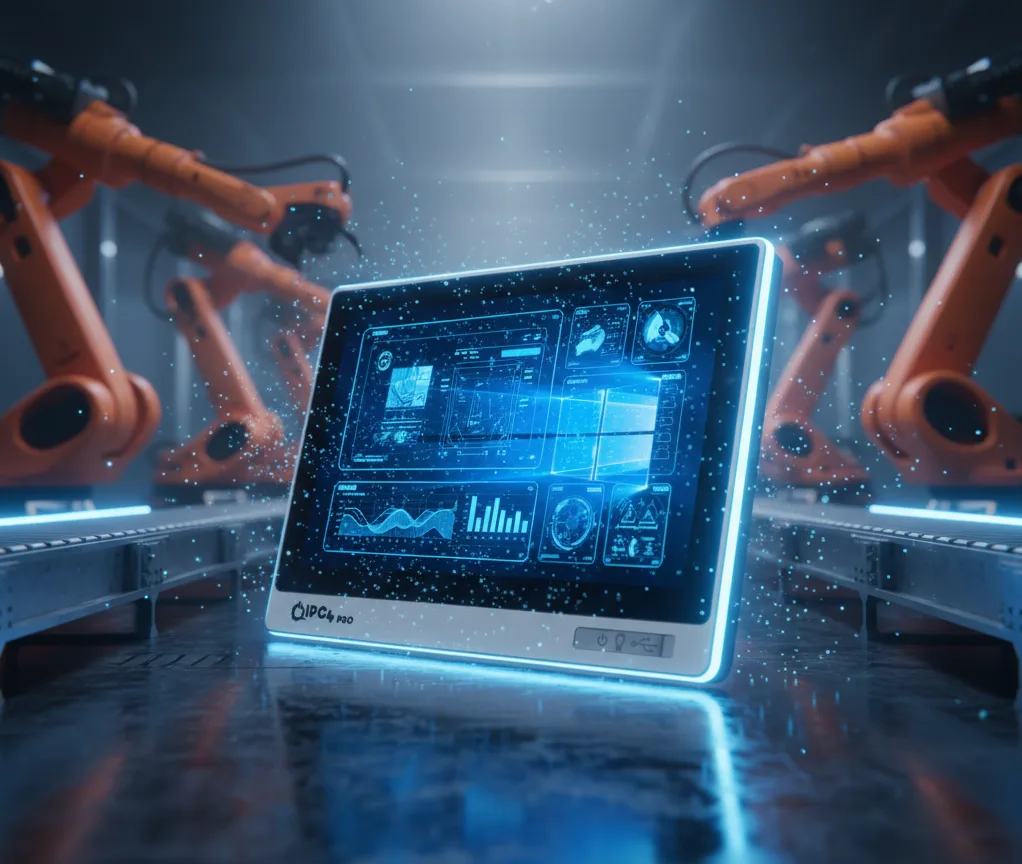
The IPC4PRO series developed by ICC Digital has become a reference point in the industrial panel PC segment. Its fanless design, aluminum body, high heat resistance, and stable operation over a wide temperature range have optimized it for challenging manufacturing environments.
IPC4PRO supports security-focused network segmentation with Intel Core i5/i7 processor options, high-speed SSD storage, and dual LAN ports. This allows the PLC network to be isolated from the factory IT infrastructure, preserving data integrity. Direct data transfer to ERP or MES systems via OPC UA is possible.
The AAEON brand is ASUS's industrial solutions division. AAEON Panel PCs offer stable performance even under harsh industrial conditions with long-term parts supply guarantees, EN50155, E-Mark, and IP65 certifications. They are also preferred in AI applications due to models supported by NVIDIA Jetson for AI-based image processing and quality control processes.
These two platforms share the same vision across different segments: high durability, uninterrupted performance, and long-lasting investment protection.
5. The Key to Digital Transformation: Integration and Simplicity
Panel PC-based systems simplify the automation architecture. There is no need for a separate HMI, data collection module, or engineering terminal. The entire system can be monitored, updated, and backed up from a single device.
This approach reduces both hardware costs and maintenance burdens. In the event of a failure, the process performed in the field is no different from a classic HMI replacement; however, since the panel PC also carries the software and configuration, the system can be re-commissioned within minutes.
These devices also provide a solid foundation for cloud-based data analytics, edge AI integration and cyber security applications. Working with OT-focused security infrastructure, they preserve OT/IT integrity.
6. The Strategic View: Moving from HMI to IPC Is a Transformation, Not an Upgrade
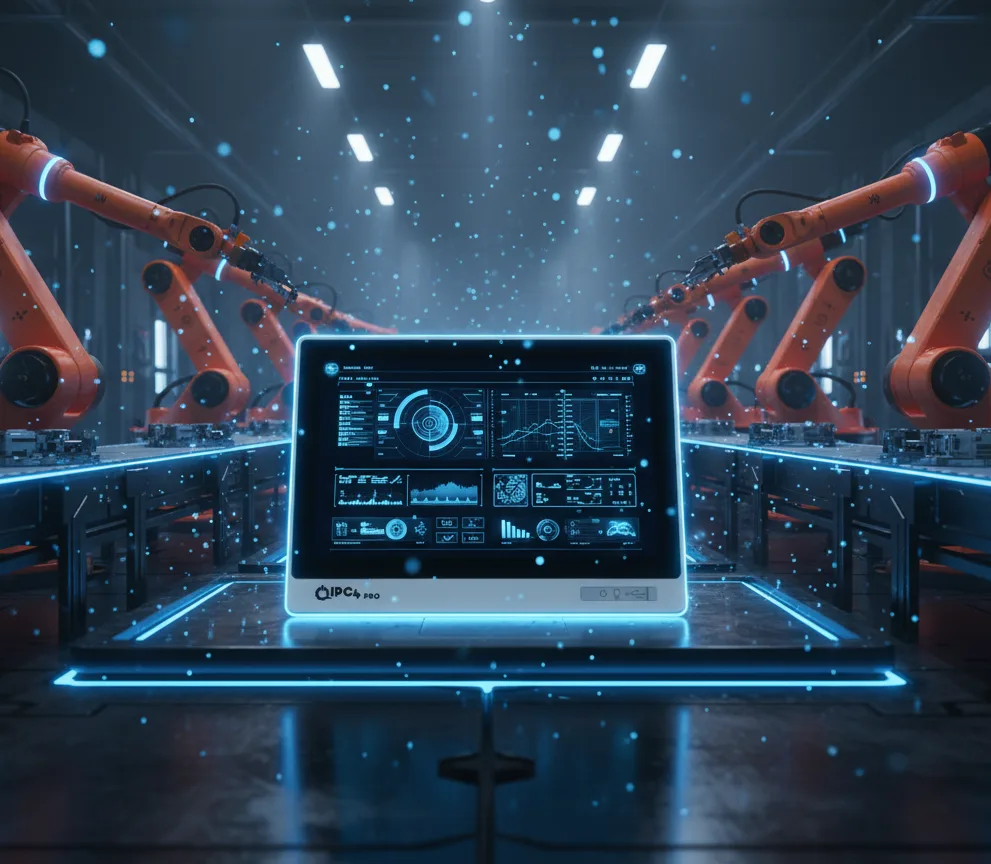
Switching to an industrial panel PC is not just a device change; it is an investment in the factory's digital transformation vision. HMIs perform specific tasks; however, panel PCs transform into the decision support system of the production line.
Choosing the IPC4PRO or AAEON platform is an investment not just in today's automation projects but in tomorrow's industrial intelligence. Because these devices not only monitor production but also connect systems, generate data, and optimize processes.
7. Conclusion
In industrial automation, competition is no longer measured by hardware power but by integration capability. While classic HMIs represent the face of control; industrial panel PCs form the brain of control.
Result: Therefore, the answer is clear for every manufacturer looking to invest in the future:
Choose not an HMI, but an IPC4PRO or AAEON Panel PC.
Because this is not just a change of interface, but the first step in the journey of digital transformation.