





1.0 Introduction: A Paradigm Shift in Operator Panels
Operator panels (HMI), which are the fundamental interface of automation in modern production, have successfully served for many years. However, the requirements for data integration, remote access, flexible operation, and advanced analytics that emerged with the Industry 4.0 paradigm clearly show the limitations of this conventional technology. Traditional HMIs cannot fully adapt to the new world due to their closed architectures.
At this point, the transition to Industrial Panel PCs (IPC) represents not just a hardware upgrade but a strategic evolution aimed at enhancing production efficiency and competitiveness.
2.0 The Key Distinction: From Closed-Box Systems to Open Platforms
(a) Traditional HMI Architecture: A Closed World
A standard HMI operator panel represents a fixed whole of hardware (screen + processor) + embedded operating system (e.g., Windows CE) + HMI software. Installing third-party software from outside the manufacturer is often impossible. This structure limits the panels to being merely "HMI interfaces."
(b) Industrial Panel PC Architecture: Unlimited Flexibility
In contrast, an Industrial Panel PC is a device where hardware and software layers are separated, capable of running on a standard operating system (usually Windows 10/11 or industrial Linux), and can undertake much broader tasks alongside HMI software. It can serve not only as an operator screen but also as a data processing, edge computing, analytics, and integration center.
Summary Table
| Feature | Closed HMI | Industrial Panel PC |
|---|---|---|
| Architecture | Hardware + OS + Software together | Hardware + open OS + multiple software |
| Operating System | Embedded, manufacturer-specific | Standard Windows/Linux |
| Software Installation | Impossible (third-party) | Full software installation capability |
| Flexibility & Integration | Very limited | High |
| Future Readiness | Poor | Strong |
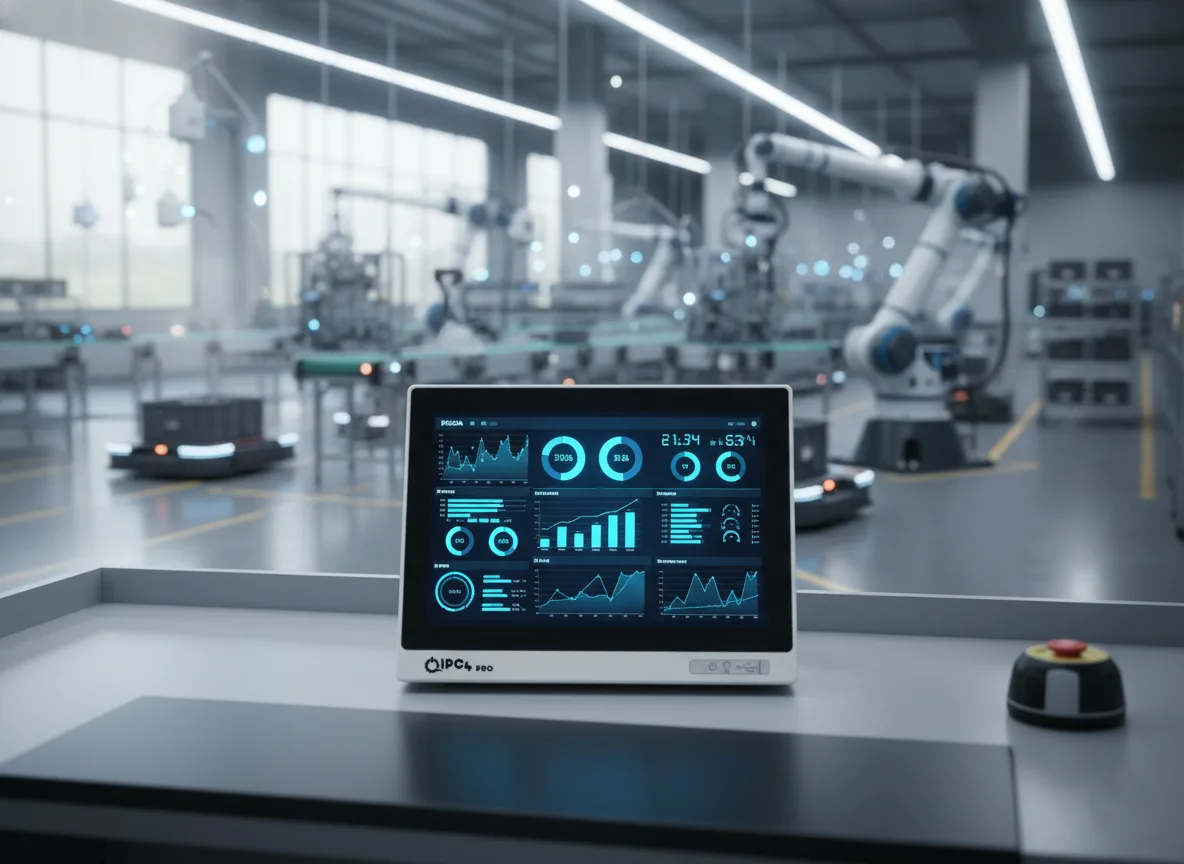
This architectural shift is not merely a technical improvement; it is a strategic step in the digitalisation of automation.
3.0 The Strategic Advantages of Industrial Panel PCs: From Performance to Integration
(a) Superior Performance and Enhanced User Experience
Classic HMI panels mostly use ARM-based low-power processors. In contrast, a high-performance Panel PC can contain powerful processors like Intel Core™ i series. There is a difference in screen transitions, graphics fluidity, and data visualization.
Example: While the operating system and application switch in two seconds, it drops to milliseconds on the Panel PC.
(b) Unlimited Flexibility and Future Readiness
A Panel PC can perform tasks such as HMI, SCADA, database client, and remote maintenance tool simultaneously. This combines different silo systems into a single device:
- SCADA / HMI applications
- SQL/Excel/PowerBI integration
- Remote service access
- Machine vision applications with cameras
This flexibility goes well beyond what a classic HMI can offer.
(c) Advanced Connectivity and Vendor Independence
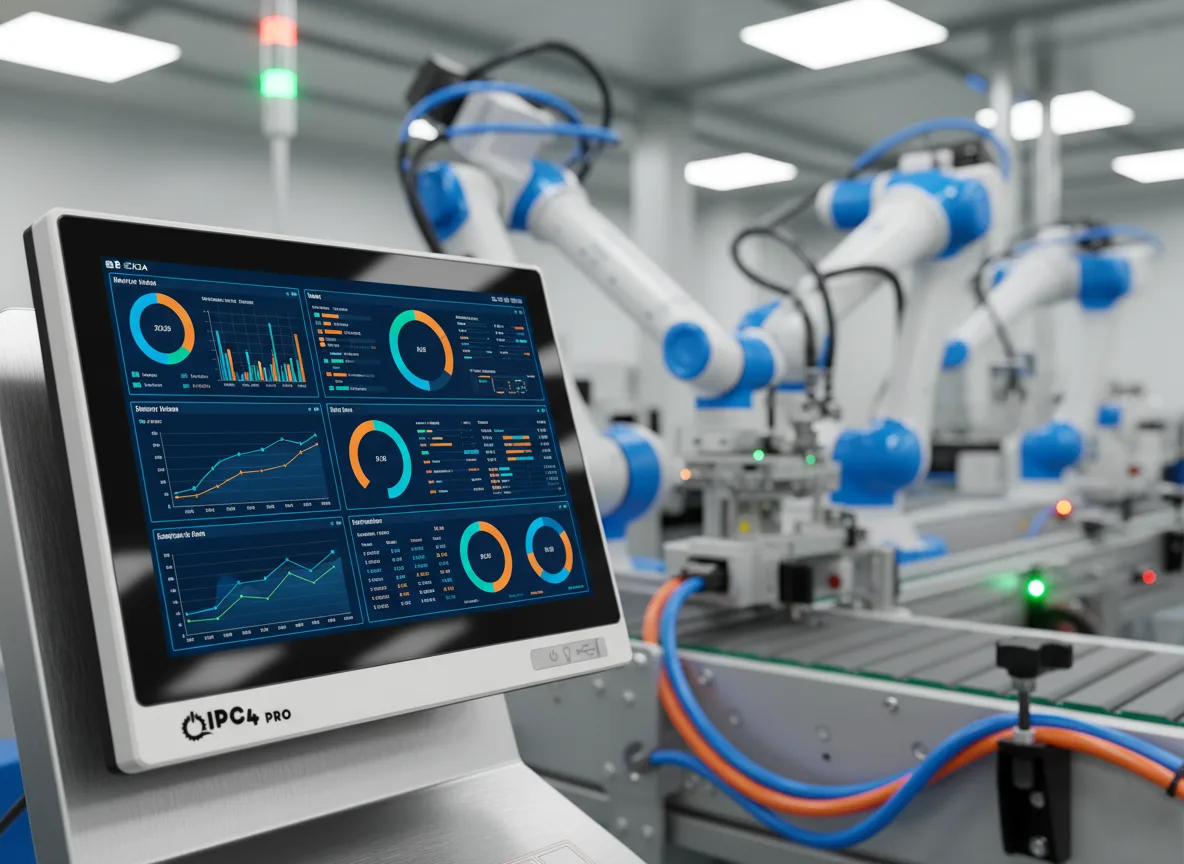
Panel PCs typically offer multiple connectivity options such as Ethernet ports, USB3, and HDMI. For example, a device can connect to a brand PLC via Profinet and to a different brand PLC via EtherNet/IP simultaneously—eliminating vendor lock-in.
(d) Transforming Data into a Strategic Asset
Panel PCs can offer high-capacity SSD/NVMe storage. This allows production data, maintenance records, trend analysis, and historical reports to be stored on the device—at a level not possible with classic HMIs.
(e) Scalability and Ease of Maintenance
Components such as RAM and storage can be upgraded. A backup device can be activated within minutes instead of a faulty device. This provides a significant advantage in terms of maintenance time.
These advantages are critical for the success of modern automation projects and are offered at a high level, especially with solutions like the IPC4PRO Industrial Panel PC.
4.0 IPC4PRO Series – The New Standard of Industrial Automation
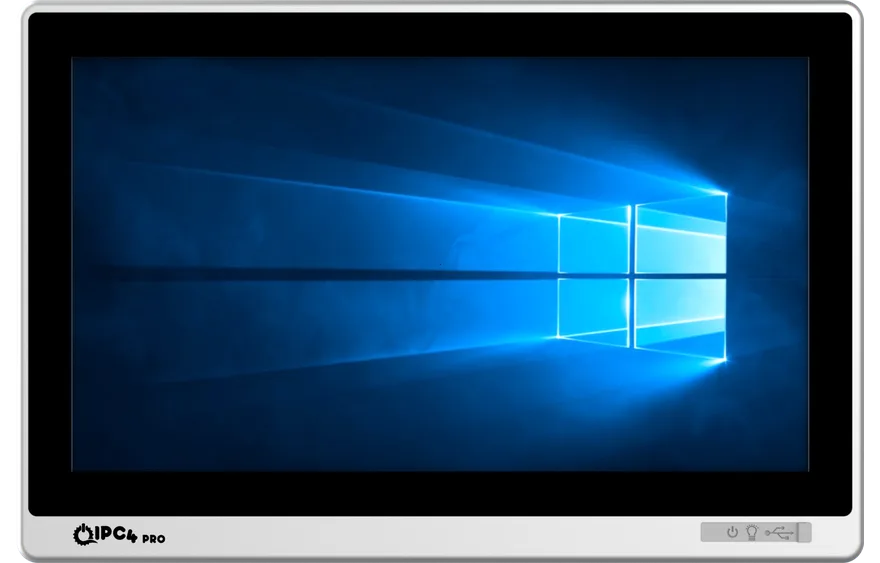
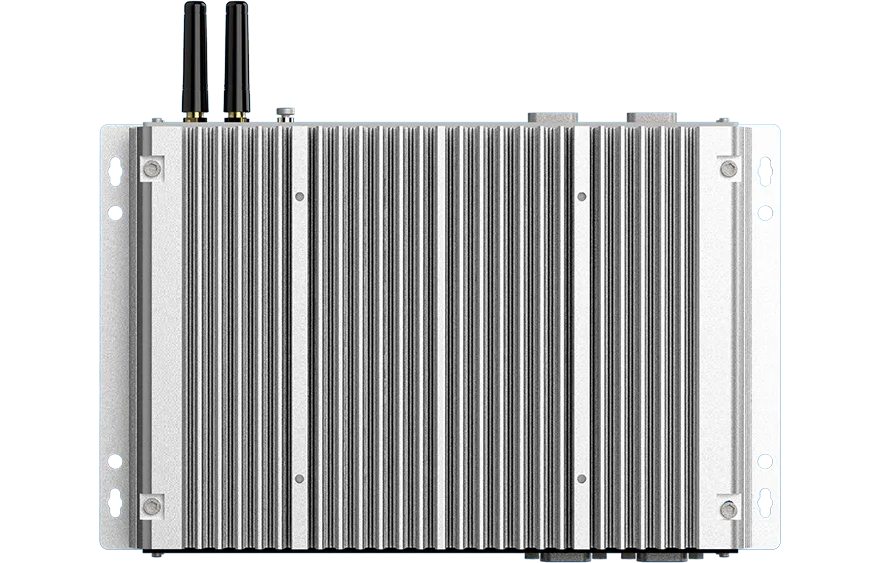
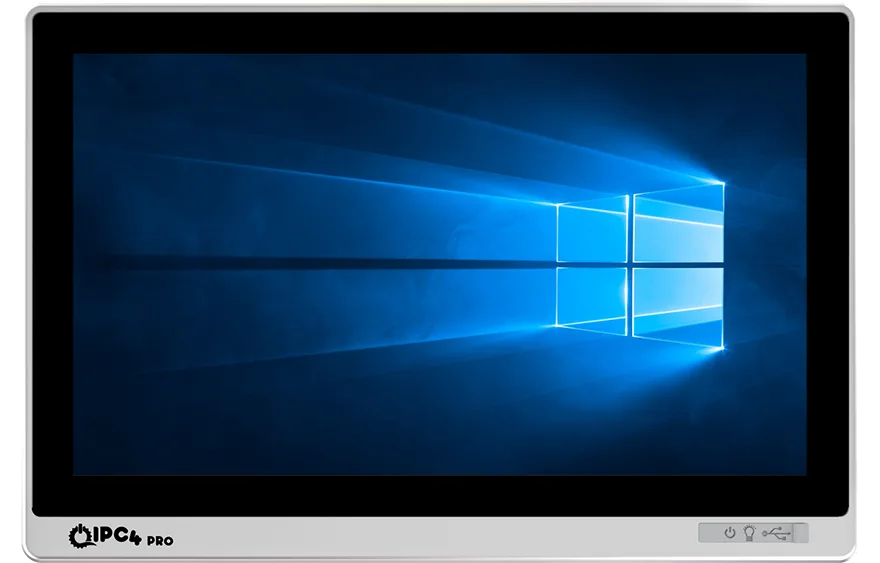
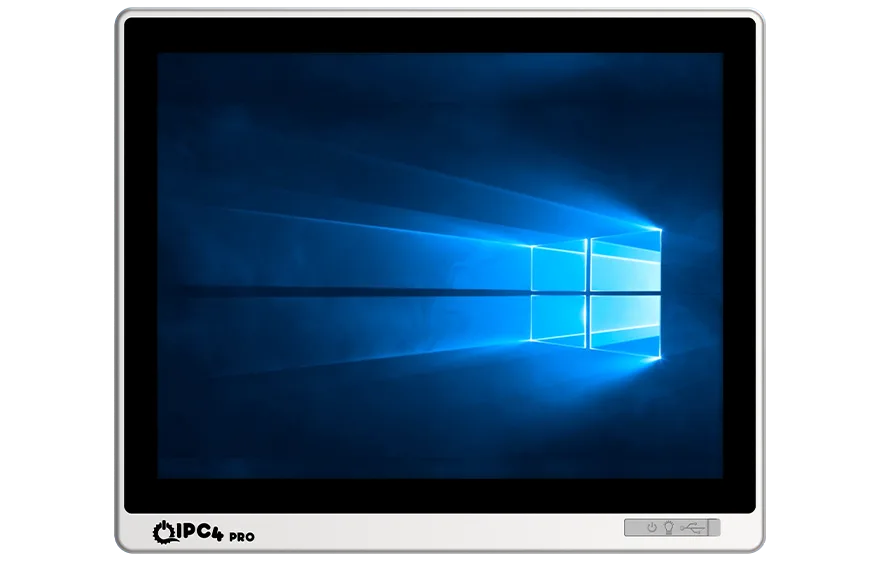
The IPC4PRO series stands out as a high-performance Panel PC, with processor options from the Intel® Celeron® to the Core™ i7, IP65 front panel protection, EtherCAT support and multiple Ethernet ports.
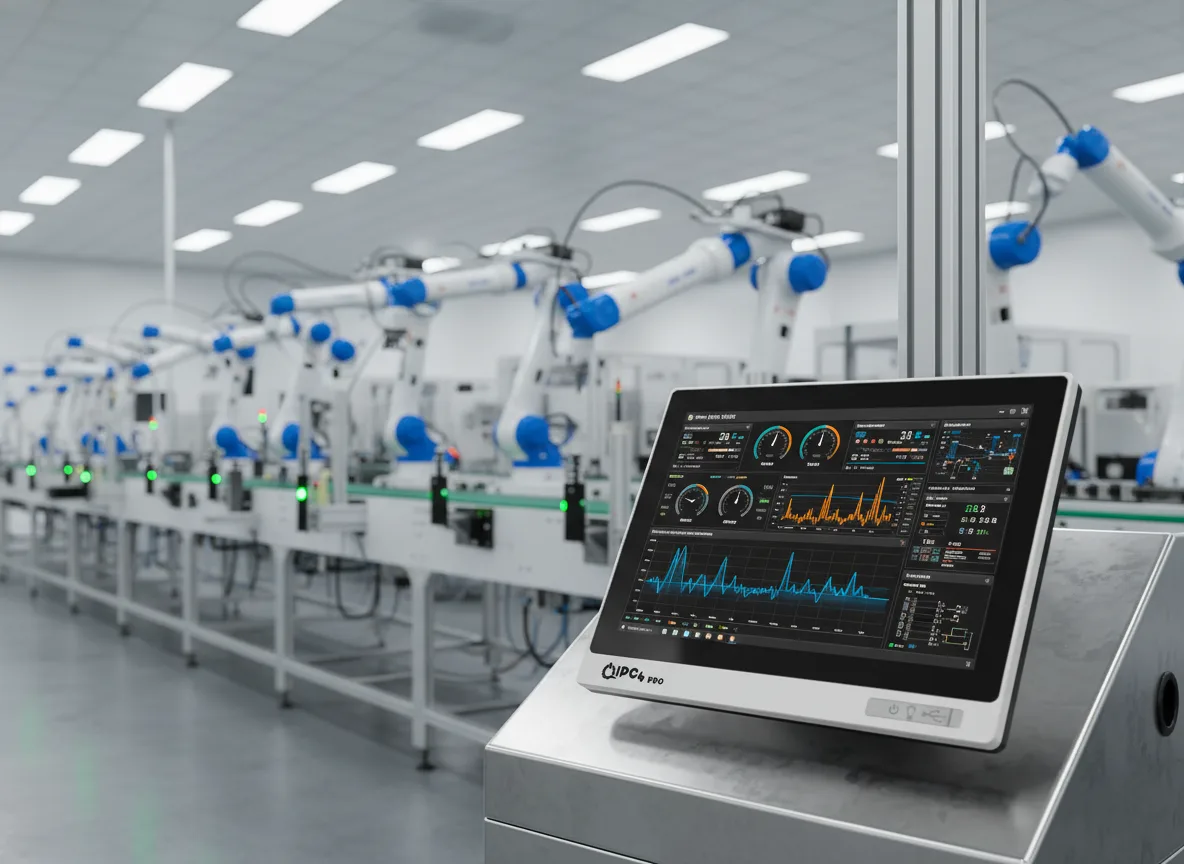
Designed for the demanding conditions of industrial automation, it gives users a platform that is more than an HMI panel.
5.0 Easing the Transition: Seamless Integration with Existing PLC Systems
(a) The Secret of Communication: Software-Based Protocol Drivers
The HMI or SCADA software installed on the Panel PC hosts drivers such as Profinet, EtherNet/IP, and Modbus TCP. This allows your Panel PC to communicate directly with PLCs from different brands—eliminating hardware dependency.
(b) Brand-Based Integration Examples
- Siemens S7-1500 (Profinet)
- Omron NJ/NX (EtherNet/IP)
- Schneider (Modbus TCP)
- ABB (OPC UA / Modbus)
- Delta (Modbus TCP)
These examples demonstrate that controllers from different manufacturers can work together on a single platform.
(c) Detailing Advantages with Practical Scenarios
- Recipe management: When "Product Code X" is entered, data is pulled from the SQL database → written to the PLC.
- Machine vision: Quality control connected to a camera can be performed through both HMI and image processing on the Panel PC.
- IT/OT network separation: One Ethernet port connects to the OT network, while the other connects to the IT network; the Panel PC acts as a data transmission bridge.
(d) Technical Comparison Table
| Feature | Standard HMI | Panel PC (IPC4PRO) |
|---|---|---|
| Operating System | Closed (Windows CE, proprietary) | Open (Windows 10/11 IoT, Linux) |
| Processor | ARM-based, low power | Intel Core i3/i5/i7 high performance |
| Data Logging | Limited | High capacity with SSD/NVMe |
| Additional Software | Only HMI Runtime | SCADA, MES, Database, Remote access |
| Connectivity | 1 Ethernet | 2+ Ethernet, USB3, HDMI, OT/IT separation |
| Maintenance & Upgrade | Hardware dependent | RAM/SSD upgradeable, brand independent |
| Conclusion | Screen function | Brain of the machine / data center |
6.0 Return on Investment (ROI): The Value of IPC in Numbers
The initial investment in a Panel PC may be higher; however, the total cost of ownership (TCO) is particularly lower in the short term compared to classic HMIs. Reduced maintenance time, multi-brand compatibility, and increased production efficiency accelerate ROI.
Example: On a filling line, replacing a classic HMI with an IPC4PRO made screen transitions up to 12 times faster, raised efficiency by 7% and cut recovery time after a system fault to minutes.
7.0 Conclusion: Not Just an Upgrade but a Strategic Transformation
Industrial Panel PCs offer functionality far beyond traditional HMI panels. They are no longer just a screen; they are a data collection center, an edge computing device, and a gateway to ERP/MES/cloud systems.
The transition from closed systems to open, flexible, and powerful PC-based solutions is not an option in the Industry 4.0 era—it is a necessity to remain competitive. Solutions like the IPC4PRO Panel PC hold the key to this transformation.