









For many years industrial automation was built on closed, deterministic and dependable systems. With Industry 4.0 and the IIoT (industrial internet of things), those closed systems must now talk fluently to the IT world. Integrating traditional PLCs and SCADA systems with web services is usually complex, costly and slow.
This is where Node-RED, a visual flow-based programming tool, comes in. Run it on Revolution Pi hardware — Raspberry Pi based but built for the industrial floor — and a new era in automation opens up. This article looks at how Revolution Pi, supplied under authorisation in Türkiye by ICC Dijital, gives factories a voice when combined with Node-RED, how it bridges to modern platforms such as WhatsApp and X (Twitter), and what it changes compared with classic automation.
1. What Is Node-RED? The Visual Glue Between IT and OT
At its simplest, Node-RED is an open-source, flow-based programming tool for wiring together hardware devices, APIs and online services. It was created by IBM's Emerging Technology Services team and is now part of the OpenJS Foundation.
How it works
- In a browser-based editor, users drag and drop ready-made function blocks called nodes.
- Normalize production events before sending them to SCADA, MES, or cloud services.
- Trigger maintenance alerts from thresholds, counters, or downtime events.
- This low-code approach means field engineers and IT specialists alike can build powerful automation scenarios.
Why it matters in automation
- It breaks down the traditional barriers between OT and IT.
- It lets you integrate data acquisition, edge processing, notifications and cloud connectivity without writing code.
- When something needs changing, a quick visual edit replaces the recompile-and-download cycle.
2. Node-RED vs Classic Automation: What Changes
Traditional automation (PLC and SCADA) is solid on deterministic control but limited on data exchange, flexibility and integration with outside systems. Node-RED brings three important changes:
2.1 From a Closed Loop to an Open Ecosystem
- Klasik Otomasyon: It works with closed protocols (PROFINET, EtherNet/IP) and proprietary software. Talking to outside systems usually needs OPC servers or dedicated gateways.
- What Node-RED changes: It can combine OT protocols (Modbus, OPC UA, S7) and IT protocols (HTTP, MQTT, SQL, AMQP) in a single flow. You can, for example, read a value from a PLC over Modbus and send it straight to the cloud over MQTT.
2.2 Rapid Prototyping and Event-Based Logic
- Klasik Otomasyon: Logic is usually written in ladder or FBD, and every change can mean stopping the project and recompiling.
- What Node-RED changes: It is event-based — when this data arrives, do that. Changes are made in the browser and go live in seconds with the Deploy button, which shortens prototyping considerably.
2.3 Democratising the Data
- Klasik Otomasyon: Data usually sits in data blocks inside the PLC or in the SCADA system, and getting at it takes specialist knowledge.
- What Node-RED changes: Data becomes accessible as JSON, and with the Node-RED dashboard modules the shop floor can be monitored from a tablet or phone.
3. Give Your Factory a Voice: WhatsApp and X Integration via Web Services
What makes Node-RED genuinely transformative is its ability to connect automation systems to modern communication channels — a flexibility hard to imagine in classic automation.
3.1 Scenario: An Instant WhatsApp Alert in an Emergency
Suppose a critical fault occurs on a machine — a motor overheating, say.
- The classic approach: An alarm lamp lights on the HMI panel. SCADA can send an email, but it is usually delayed by the IT infrastructure.
- The Node-RED approach: Node-RED reads the temperature from the sensor → a Switch node checks it against the threshold → a Function node composes the WhatsApp message → an HTTP Request node or a dedicated WhatsApp node sends it.
Result: The technical team is informed within seconds and response time is kept to a minimum.
3.2 Scenario: Sharing a Production Milestone on X (Twitter)
Say your production line has passed its daily target.
- Node-RED reads the production counter → compares it with the target → and when the target is passed, posts automatically to the X account:
"Our line hit its 10,000 unit target today. Congratulations to the team! #SmartFactory"
That kind of post was difficult in classic automation; with Node-RED and integrated platforms it is straightforward.

4. Revolution Pi: The Ideal Industrial Hardware for Node-RED
The flexibility of Node-RED only means something on the shop floor if the hardware is right. A standard Raspberry Pi is ideal for a hobby project, but falls short against the heat, electromagnetic noise and 24 V DC supply of a factory cabinet. This is where Revolution Pi — an affordable, modular and dependable platform — comes in.
Revolution Pi Nedir?
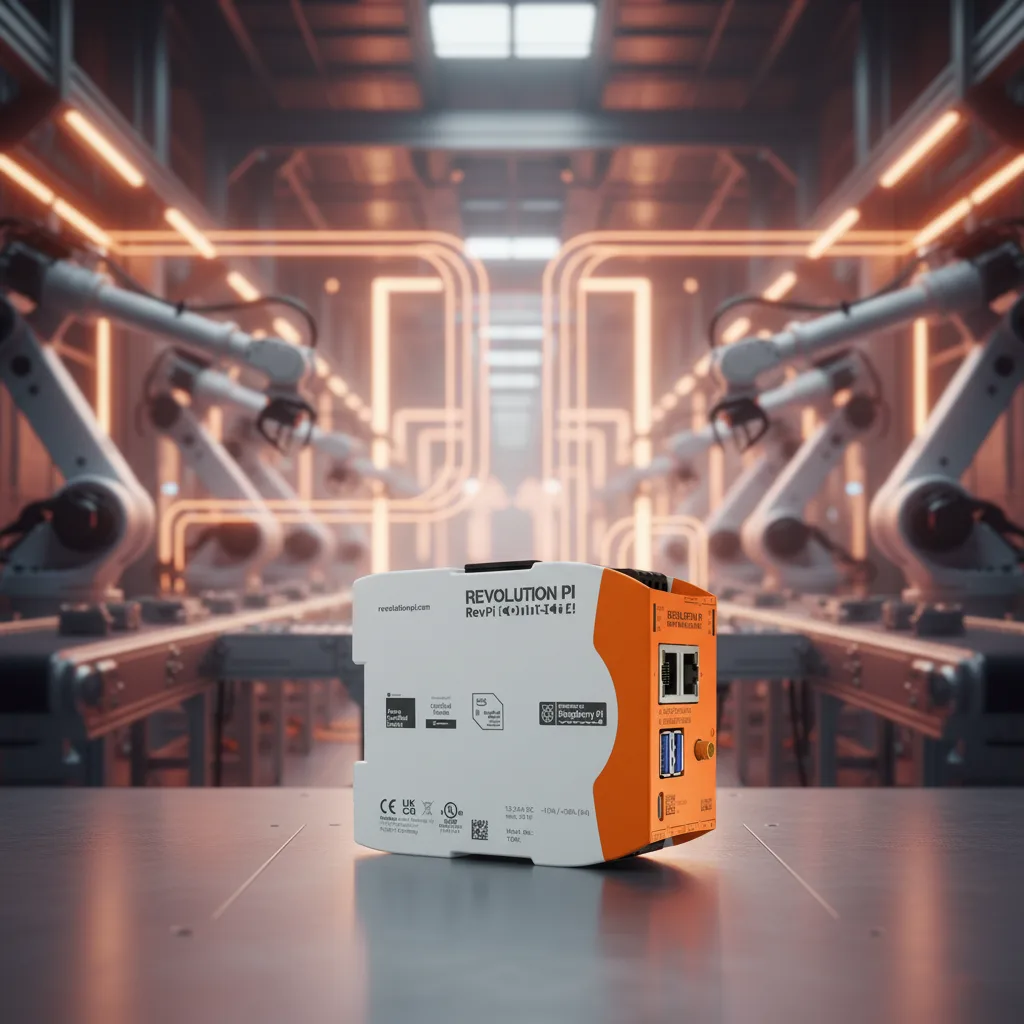
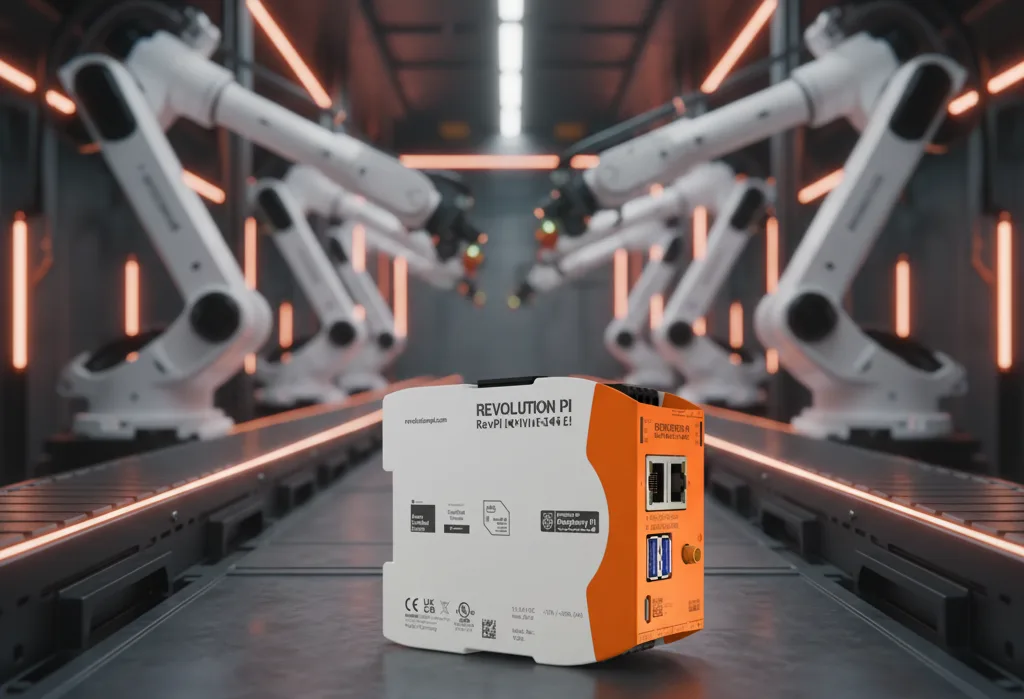
Revolution Pi is an open-source industrial controller platform based on the Raspberry Pi Compute Module. In Türkiye it is supplied and supported under authorisation by ICC Dijital Endüstriyel Teknolojiler Ltd. Şti.
- Designed for industrial use: 24 V DC supply, wide temperature range and DIN rail mounting.
- Digital and analogue I/O modules and communication gateways (Modbus, CANopen, EtherCAT and so on) can be added modularly.
- It runs tools such as Node-RED without difficulty on its Linux operating system.
5. The Advantages of Revolution Pi and Node-RED Together
5.1 A Dependable IIoT Gateway
Revolution Pi with Node-RED is a cost-effective way to collect, process and forward data to the cloud from PLCs in the field, old or new.
5.2 Removing the Middlemen with Direct Control
Thanks to the Revolution Pi I/O modules, Node-RED does more than collect data: it can control the field too — running a fan, triggering a relay and so on.
5.3 Data Visualisation and Dashboards
The Node-RED dashboard add-ons allow visualisation from a tablet or phone without expensive HMI or SCADA licences.
5.4 The Strength of Open Source, with Corporate Support
Revolution Pi and Node-RED are backed by large communities, while the technical support and hardware supply ICC Dijital provides in Türkiye add corporate assurance.
6. Uygulama Senaryosu
Example: Temperature and humidity sensors, fan control and a notification system in a food production plant
- The Revolution Pi AIO module reads the sensors.
- Node-RED flow: if the temperature exceeds 25 °C, energise the fan relay, send a WhatsApp message to the maintenance team and record the reading in the database.
- When production finishes, it also posts automatically from the X account.
Result: control, data acquisition, visualisation and notifications are all handled by one device.
Conclusion
Traditional PLCs will remain critical for high-speed deterministic control. But for flexibility, data sharing and integration on edge devices, Revolution Pi with Node-RED is setting a new standard.
For organisations that want to do more than read production data — to share it instantly, bridge between systems and let the shop floor speak — it is the most practical solution available today.